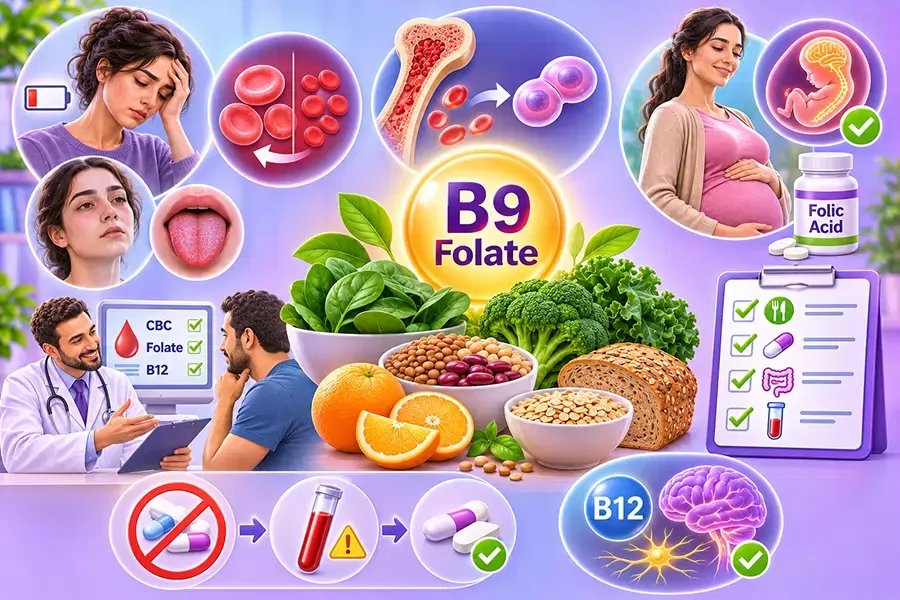
Folate is essential for normal blood-cell formation and cell division. Deficiency can cause macrocytic anemia, fatigue, pallor, or a sore tongue. Risk is higher with poor nutrition, malabsorption, or increased requirements.
Dr. Ashraf Damra advises reviewing diet, medications, and gastrointestinal conditions when deficiency is suspected, and checking a complete blood count and folate level when clinically indicated. Food sources include leafy green vegetables, legumes, citrus fruits, and fortified grains. Vitamin B12 should also be assessed before treating anemia with folate alone, because folate may improve blood counts while neurological injury from B12 deficiency continues.
Patients should not use therapeutic-dose folate without identifying the cause and agreeing on the dose and duration. People who may become pregnant should discuss preventive folic acid before conception, with the dose tailored to their medical history and risk factors.